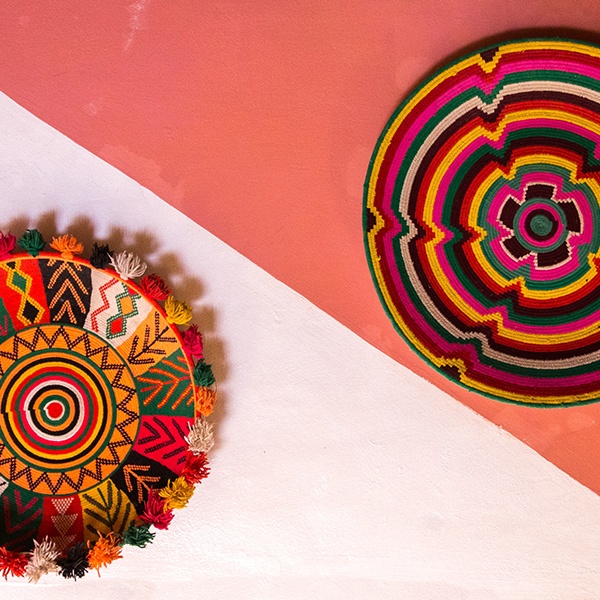
African art is, of course, diverse in both delivery, style and inspiration. However, much African art still employs colour on account of the symbolism that they are associated with. A lot of African art and African sculpture, especially those pieces that are from years gone by, is deeply rooted in spirituality and symbolism, meaning that the pallets they use are about much more than simply looking striking, they are designed to speak to our soul and to tell story through colour. Here is a breakdown of the hidden meanings behind the colour choices in African art, and the messages you may be able to mine out of the next piece of African art you come across.
- Green
Green, in the west, is the colour of Spring. The colour’s meaning takes on a similar guise in African art. It is a colour associated with new life, growth, freshness and healing. You will often see this colour used, as you might escape, in landscape work, but is often used in conjunction with stories about birth, rebirth and fertility.
- Purple
Purple is the most regal of colours. The reason for this association is this; when colour mixing was in its infancy, the colour purple was particularly expensive to make. Because of this, it was only available to those who could afford it. Purple is associated with words such as royalty, wisdom, passion and luxury. You will find this colour used in art depicting royalty, and in the dying of opulent textiles.
- Yellow
Yellow is the colour most associated with positivity. It is the colour associated with everything happy, jolly, joyful and fun. It is also the colour most paired with the concept of warmth, a colour that can really brighten up a space, and bring a homeliness and comfort that is hard to be matched by any other colour.
- Blue
Blue is perhaps the least dynamic and chaotic of the colours, a subdued and soothing tone. Its relevance and power should not be underestimated, however, for although it is not a colour that screams out or demands attention, it is also associated with a quiet confidence. African art often uses this palette to give a piece an element of calm and contemplation, of peace and affection.
- Red
Danger. Urgency. Daring. Energy! These are the characteristics of the colour red. This is known the world over. It is also often paired with green in order to represent female fertility and childbirth.
- Black
This colour is often found in a similar artistic arena to the colour red. Although it shares an ominousness with red, it is altogether less chaotic, and much more mysterious. It harbours a danger that is much more brooding; it represents power, evil and death.
- White
White, as it is in many cultures, is the colour most paired with the concept of purity, light and hope. It is often used in artwork depicting deities and gods.
- Grey
Grey is the stalwart of all colours; a representation of the constant, the strong foundation. Grey is security, authority, maturity, and stability.